Where we are
System defined
Platform architecture defined. Two patent applications filed.
Dianovo started with a television commercial. It was about trachoma, an eye disease and the leading infectious cause of blindness worldwide. It spreads through contact and through flies. What I did not know at first is that trachoma is caused by chlamydia. The same bacterium, Chlamydia trachomatis, causes the most common bacterial sexually transmitted infection in the world.
Treating this infection is not the problem. Neither is testing for it. The tests work, but they do not reach the people who need them. Where a test does arrive, the result is read by eye and rarely captured digitally. Results filed on paper, or not at all, reach the systems that track disease late or incomplete. And in many settings, being seen taking a test reveals something private before anyone knows the answer, whether it is for an STI, for HIV, or for pregnancy.
None of these failures comes from the chemistry. What fails is everything around it: a molded plastic cassette, and a storage temperature limit that is hard to keep in the places tests are needed. The Lancet Commission on Diagnostics estimated in 2021 that about 47 percent of the world has little or no access to basic diagnostics. In low- and lower-middle-income countries, it found about 81 percent of people cannot get even the simplest tests in primary care, apart from those for HIV and malaria. More than two billion lateral-flow tests are made each year, and the plastic around them runs to tens of thousands of metric tons that do nothing for the result.
So we started with the format. CENTiV™ makes diagnostics on a continuous roll rather than one molded cassette at a time. That cuts most of the plastic, and much of the shipping that comes with it. The same roll carries whatever tests a program needs. A self-service option lets a person test with no one watching and no one to interact with. Every result becomes data from the first read, which makes it possible to follow a disease while it is spreading rather than count it afterward.
People go untested for different reasons in different places. In low- and middle-income countries, price and logistics decide what arrives, and a test that is cheaper and easier to transport changes what a program can afford to send. In high-income countries, the barrier is the appointment. A test with no booking and no clinical staff present is open to people who would not go to a clinic.
People still go blind from an infection we have known how to cure for decades, because neither the diagnosis nor the treatment reaches them. Others go untreated because of stigma. That is what we are here to change.
Redefining how rapid diagnostics are manufactured, transported, used, and discarded.
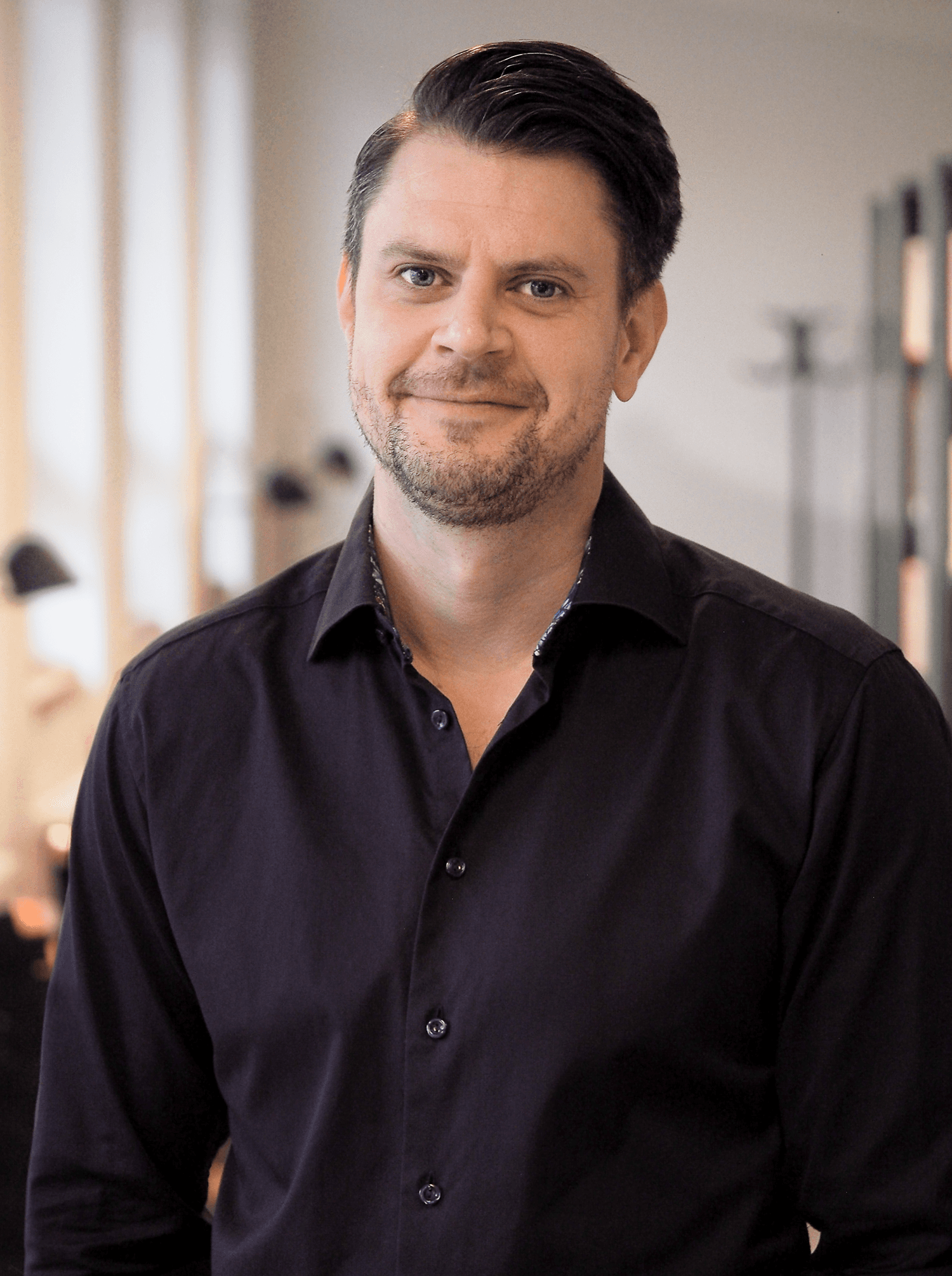
Martin Lundberg
CEO & Co-Founder
Two co-founders. Four people work on CENTiV full time, the CEO among them. Four specialists contribute alongside them, across clinical and regulatory affairs, software and AI, chemistry and materials, and digital implementation.
Founders
CEO & Co-Founder
Created CENTiV and leads its system architecture and company strategy. About ten years in consumer packaged goods before Dianovo, with product development experience across dietary supplements, probiotics, and food-packaging materials. Drives IP development and the patent roadmap.
Co-Founder
Advises Dianovo on commercial strategy, branding, and partnerships. Founded the communications agency NOKOBY in 2009 and led it as CEO for nearly sixteen years, until its operations were acquired in 2024. Board-certified through StyrelseAkademien, the Swedish Academy of Board Directors.
Full-time team
Bioanalytical Development
PhD in Clinical Tropical Medicine from Mahidol University, with peer-reviewed publications on LC-MS/MS bioanalytical methods for antimalarial and antiparasitic drugs. Leads CENTiV's bioanalytical method development and validation to regulated laboratory standards.
Senior Mechanical Engineer
PhD in Engineering Physics from Lund University, with doctoral research at NanoLund in microfluidics. Led mechanical development of MedTech systems at BrainCool to ISO 13485 and ISO 14971, focused on FEA simulation, tolerancing, and design for high-volume manufacture. Leads mechanical design for the dispenser and the roll.
Development & Communications
Grant development, proposal work, partnerships, and external communications. Previously Vice President of Partnership Development at AIESEC, building partnerships and leading a team. Bachelor's degree in legal studies. Pursuing an MSc at Lund University.
Specialists we work with
Clinical & Regulatory
More than twenty years in healthcare and clinical research, with a background as a registered nurse; medical devices, IVDs, and EU regulatory strategy since 2019. Founder of DMRY & Co and former Director of Clinical Development at GBA Key2Compliance, and earlier took novel diagnostic technology toward CE certification at Medfield Diagnostics. Advises Dianovo on product positioning, clinical development strategy, and evidence requirements.
Software & AI
MSc in Computer Science at Blekinge Institute of Technology, specializing in applied machine learning. Earlier degree in Computer Engineering from Dire Dawa University Institute of Technology. Software and digital infrastructure for CENTiV.
Chemistry & Materials
BSc and MSc in forensic chemistry. Trained in certified reference materials, one of the foundations of method validation under IVDR. Works on the strip material for the first test panel.
Digital Implementation
PhD candidate in Embedded Electronics Engineering at Lund University Faculty of Engineering (LTH). MSc in Embedded Electronics Engineering from LTH. Computer architecture and embedded systems for CENTiV.
Where we are
Platform architecture defined. Two patent applications filed.
Next
All parts working together as one system. Lab testing against reference samples. The regulatory route set.
After the system is integrated
First small clinical studies with the kinds of patients the test is for, once the integrated system has passed lab testing. Cost and environmental evidence gathered at the same time.
After clinical feasibility
Regulatory certification, commercial launch, and new tests added for readers already in use.
Where we are
Platform architecture defined. Two patent applications filed.
Next
All parts working together as one system. Lab testing against reference samples. The regulatory route set.
After the system is integrated
First small clinical studies with the kinds of patients the test is for, once the integrated system has passed lab testing. Cost and environmental evidence gathered at the same time.
After clinical feasibility
Regulatory certification, commercial launch, and new tests added for readers already in use.