One hundred tests. One sealed roll.
100 → 1
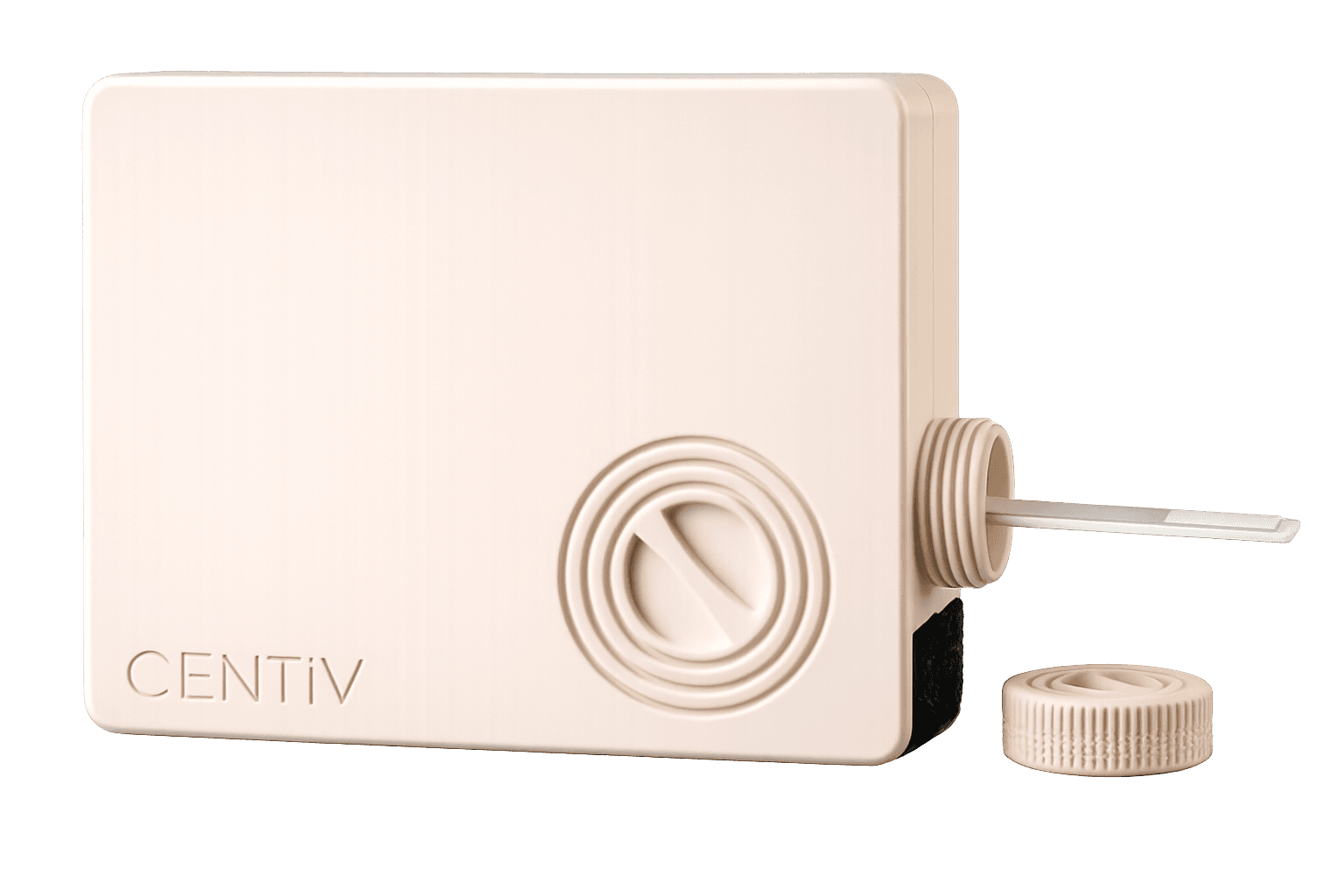
A single test, end to end.
Four steps. Each one removes a common way today's rapid tests go wrong, either by automating the step or by designing it out.
01
Feed
Start with the sealed roll.
The buffer is built in and releases only when the sample is applied. That takes wrong volume, wrong order, and wrong timing out of the operator's hands, for every one of the 100 tests on the roll.
02
Separate
Separate the strip from the dispenser.
Blood and urine stay out of the part of the dispenser that feeds out the strips. That safety comes from the design, not from instructions.
03
Dose
Apply fingerstick blood or urine to the sample pad.
No vial to uncap, no timing to measure, no external reagent to handle.
04
Read
The result appears within minutes. Read by eye, handheld reader, or KiOSK.
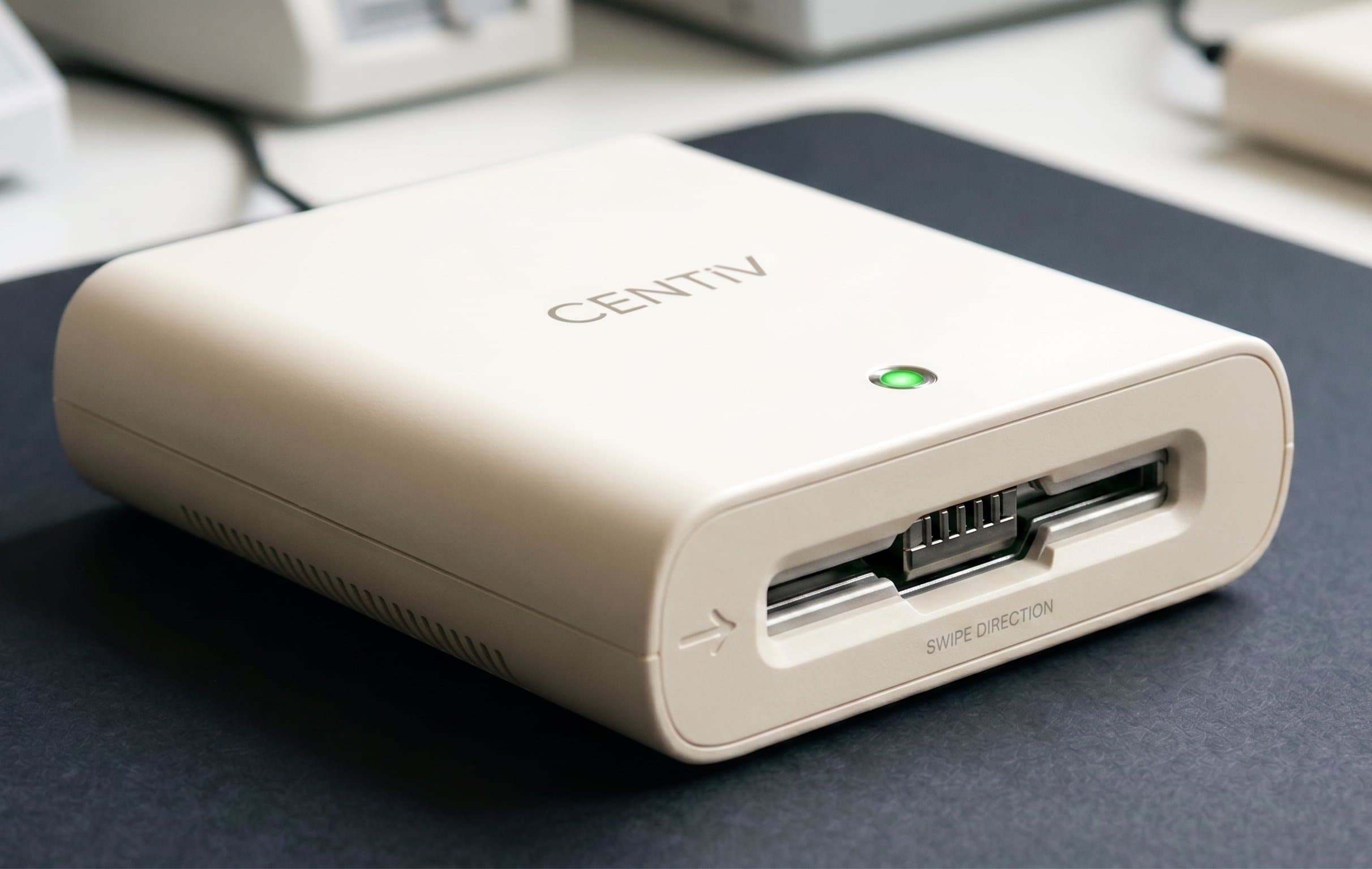
The reader is designed to capture the test line digitally, including signal too faint to see by eye, so the result does not depend on who is reading or when. After the visual read window closes the result is hidden from anyone nearby, and only the reader keeps a record of it.
Three modes of use.
One roll, three ways to use it: handheld on its own, handheld with the reader, or in a self-service KiOSK.
Handheld, visual
For fieldwork and outreach where infrastructure is limited. The result is read by eye, with no electronics and no external buffer, and the roll carries 100 tests.
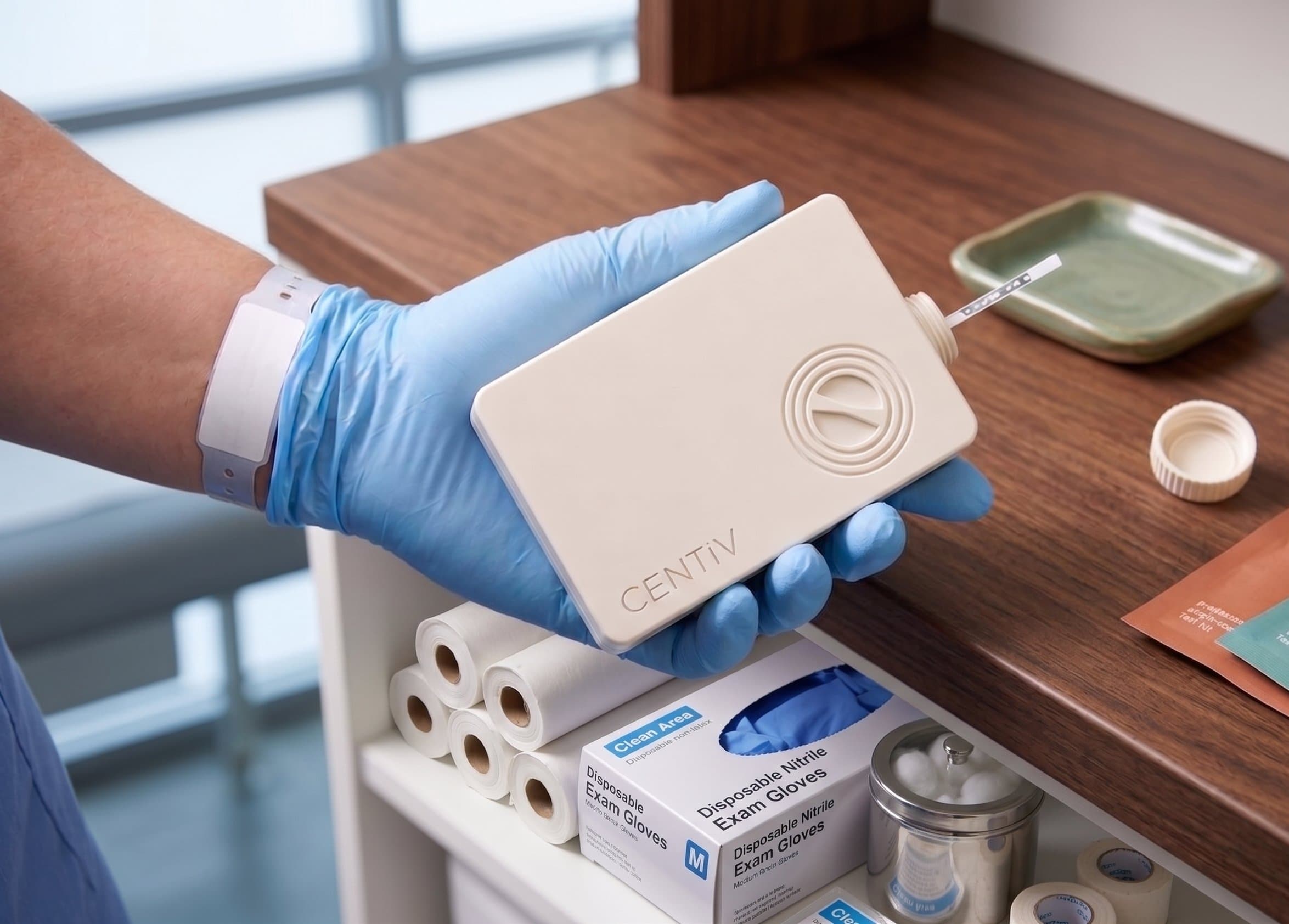
Handheld, with reader
For clinics and field teams that need a recorded result. The dispenser pairs with a digital reader for lines too faint to see by eye.
The result does not depend on who reads it, and it goes into the patient's record in standard healthcare data formats.
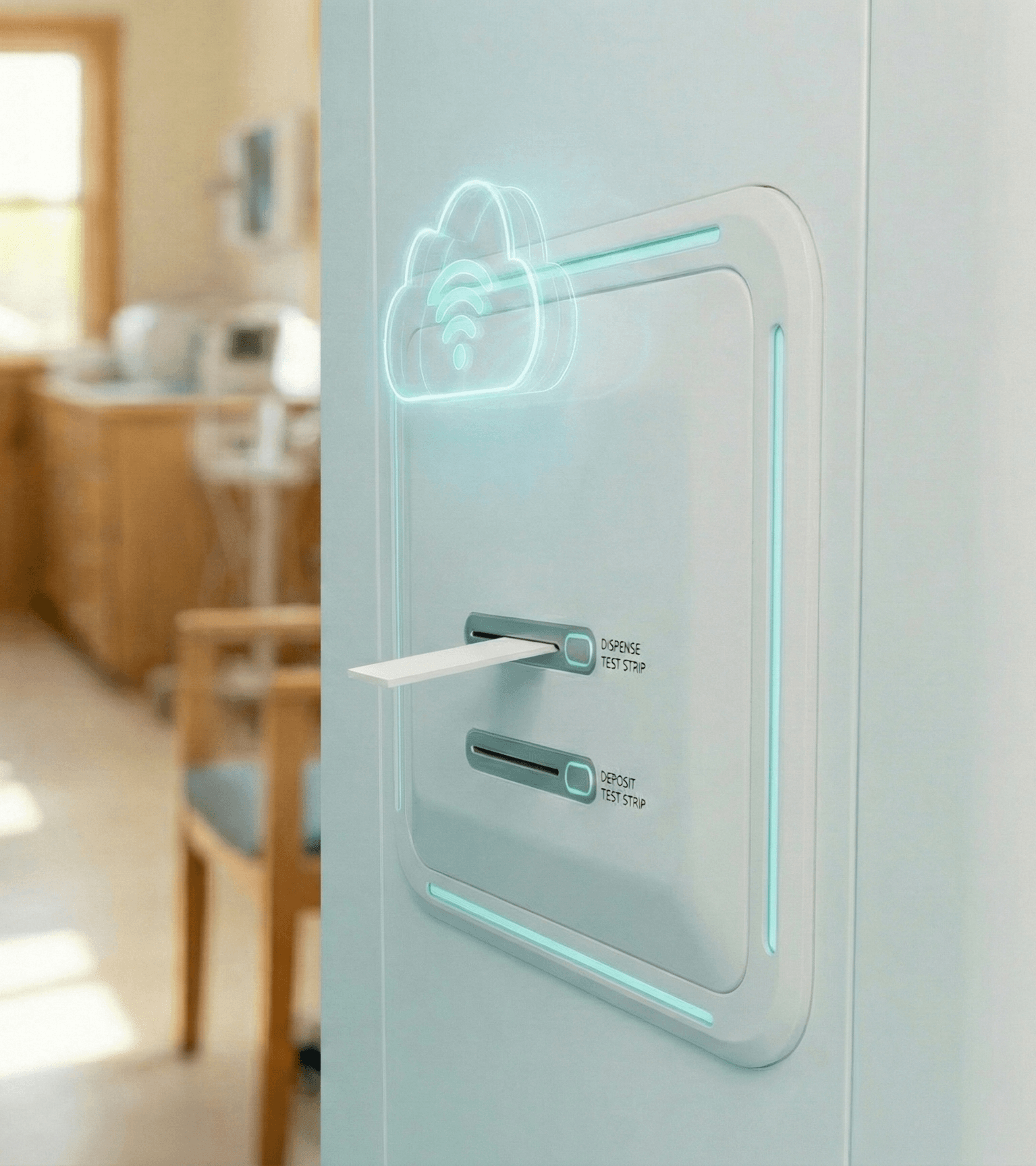
Installed KiOSK
For self-service access. The handheld dispenser docks into the KiOSK to restock it, so the same roll works in all three modes.
No clinician or pharmacist is present at the KiOSK. It is there to lower the stigma and access barriers that keep people from HIV and sexually transmitted infection testing.
Surveillance data from the KiOSK is pseudonymized at the source, so it can feed regional disease tracking without showing who took the test.
Designed first for pregnant women.
The first CENTiV panel covers HIV, syphilis, and hepatitis B. All three can pass from mother to child. Found during pregnancy, each can be treated in time to protect the child. The World Health Organization asks that every pregnant woman be tested for all three.
We start with the pregnancy check-up because it is a visit women already attend, so no separate testing appointment is needed. One sample on one strip gives all three answers during that visit, and the reader records them.
WHO estimated 700,000 congenital syphilis cases in 2022, with 390,000 adverse birth outcomes. Of those outcomes, 53 percent were in women who came to antenatal care and were not tested for syphilis.
Those women had already reached care. A test that is simple to run at that visit is where CENTiV starts.
- HIV
- Syphilis
- Hepatitis B
Antenatal screening is the first use, not the only one.
One platform, many panels.
- Every roll runs on the same reader.
- Adding a test means new chemistry and a software update, not new molds or machines.
- Several tests can share one strip, so one sample and one read cover a whole panel.